
Satya
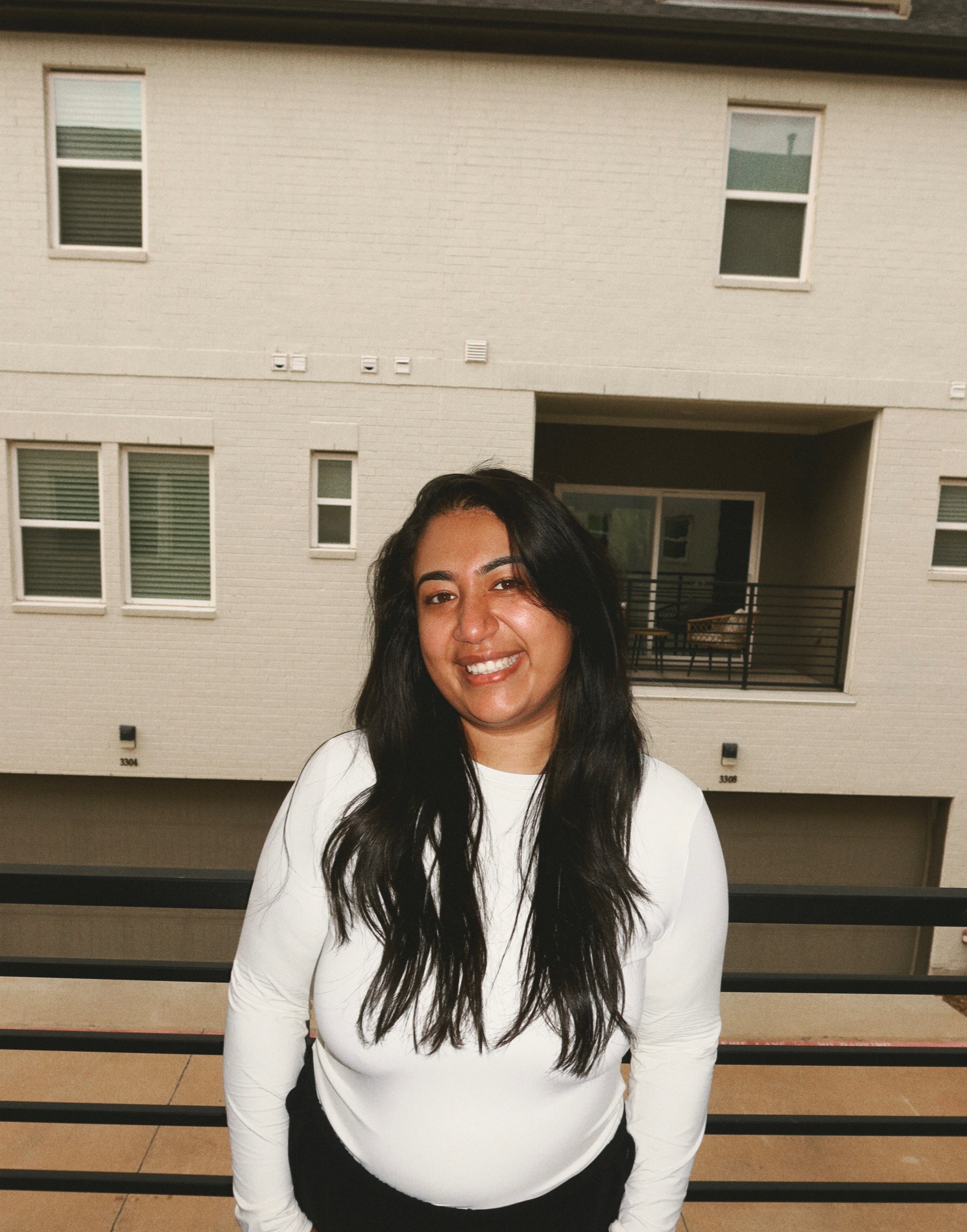
Hi, I’m Nikita.
Nikita Bendre, M.S., LPC
Founder & Psychotherapist
I’m a psychotherapist, lifelong student of human behavior, and someone who believes deeply in our capacity to understand ourselves more honestly.
What has always fascinated me about psychology isn’t simply what people do. It’s why.
Why do we repeat a relationship pattern we can clearly see isn’t working? Why can someone be deeply competent professionally and feel completely lost emotionally? Why do we understand something intellectually but still struggle to change it? Why do certain experiences stay with us long after they’re over?
Those are the questions that inform the way I practice therapy.
Rather than approaching symptoms in isolation, I work with clients to understand the larger system around them, including their relationships, attachment patterns, family dynamics, culture, nervous system, learned behaviors, identity, and life experiences.
My style is warm and compassionate, but it is also active. Therapy for me is an engaged, collaborative process. We’re not just sitting in silence while you talk; we’re actively exploring what’s happening beneath the surface together.
We’ll get curious together. We’ll notice patterns. Make connections. Question assumptions. Develop skills. Sit with uncomfortable truths. Practice doing things differently.
And sometimes we’ll laugh. Because therapy can hold seriousness without making every moment heavy.
My Approach
No two clients arrive in my office with the same history, nervous system, relationships, culture, personality, or needs. Their therapy shouldn’t look identical either.
My clinical approach draws from behavioral and relational psychology, attachment theory, trauma-informed care, nervous-system regulation, cognitive interventions, and other evidence-based modalities depending on the needs of the individual.
But theory is only useful when it helps us understand the human being sitting in front of us.
I am particularly interested in the intersection between individual psychology and the systems surrounding us: how family, culture, relationships, identity, and environment shape the beliefs and behaviors we carry into adulthood.
That perspective is especially important in my work with clients who have felt misunderstood by traditional mental health spaces.
My Background
I earned my Bachelor of Arts in Psychology from the University of Texas at Austin, where my work in cognitive psychology helped establish the foundation for my interest in human behavior.
I later earned my Master of Science in Clinical Mental Health Counseling, with clinical training focused on areas including trauma, early experiences, neurodivergence, and culturally responsive mental health care.
During my training, I became increasingly aware of a gap within traditional mental health care.
People of color, immigrants, LGBTQ+ individuals, and clients navigating complex cultural or family systems were often receiving treatment that addressed their symptoms without adequately understanding their context.
I wanted to practice differently.
That belief became part of the foundation for Satya Counseling & Psychotherapy: a practice where evidence-based treatment and cultural understanding don’t compete with one another.
They belong in the same room.
